

Beyond "So Asian"—Finding a Language for Your Story
Introducing the Asian American Quadrilateral

“Why would I have to learn what it means to be Asian American? That’s ridiculous. I am Asian American, and I have more than enough experience being one.”
This is a sentiment I often hear. In one sense, it is absolutely true. People have ample lived experience as Asian Americans. Yet lived experience alone does not necessarily constitute critical knowledge. Without careful reflection, even our understanding of our own experiences can remain partial and limited.
The Limits of Our Language
"The limits of my language mean the limits of my world,” stated philosopher Ludwig Wittgenstein. He was explaining how every personal experience is an interpreted one. Crude language leads to an oversimplified or distorted interpretation of experience, whereas a sophisticated and nuanced language can help bring out the complex textures of our lives.
Because of our white-normative educational system in the U.S., Asian Americans, even well-educated ones, can have simplistic language when talking about their lives and experiences. So we end up with people defaulting to phrases like that’s “very Asian,” “so Korean,” “Chinesey” and the like. Casual jokes among friends are one thing. But when we must make sense of our traumas, challenges, and confusions, do we have the vocabulary?
At this point, we can try to find our favorite interpretive key in Asian culture, immigration, race, etc. and risk having our experience be reduced to a stereotype. Which is the key? Maybe different keys for different people or situations? If you do not want to end up with a racial straitjacket of stereotypical identity, how do you know when you've learned enough to speak your own life fluently?
A Grammar for Speaking Asian American
This is the idea behind the Asian American Quadrilateral (AAQ), a simple tool to organize our identity and experience by presenting four interpretive lenses—Asian heritage, migration, American culture, and racialization. You might think of it as a basic grammar for speaking Asian American.
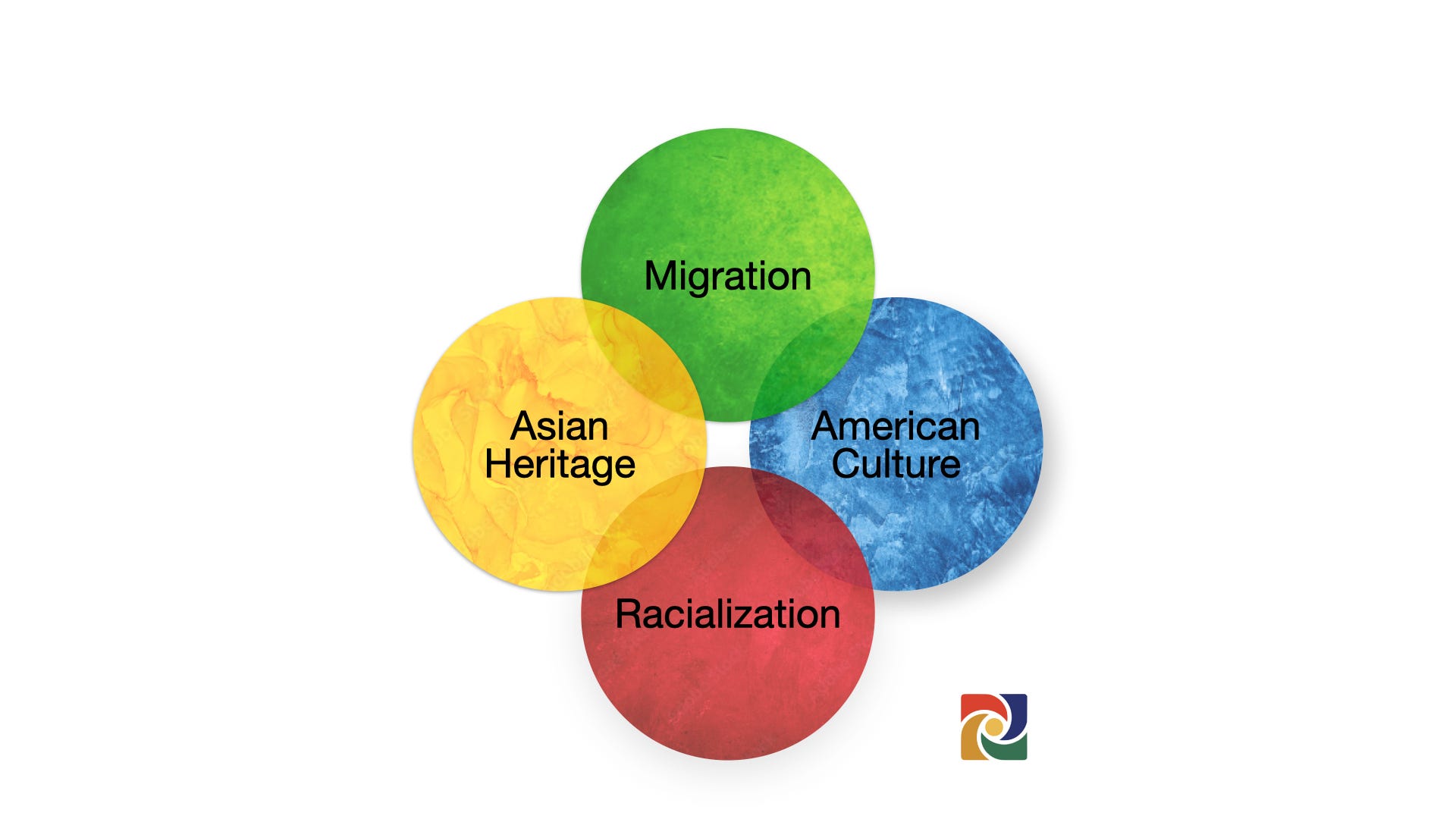
Every Asian American, whether they are East, Southeast, South Asian American, adoptee, or mixed race, negotiates their identity and experience through their own unique recipe of the AAQ. Considering all four lenses of the AAQ protect us from stereotypic reduction, while guiding us toward all the intersectional complexities.
Naming as Transformation
Biblically speaking, names and naming represent, among other things, transformation and calling. Through properly naming the various dimensions of ourselves and our experiences, we offer ourselves to be reconciled to God. Since its founding, the Asian American Center has sought to equip Asian Americans to make sense of their story with a more expansive language, not only for our own well-being, but for our deep healing and transformation for God’s kingdom work.
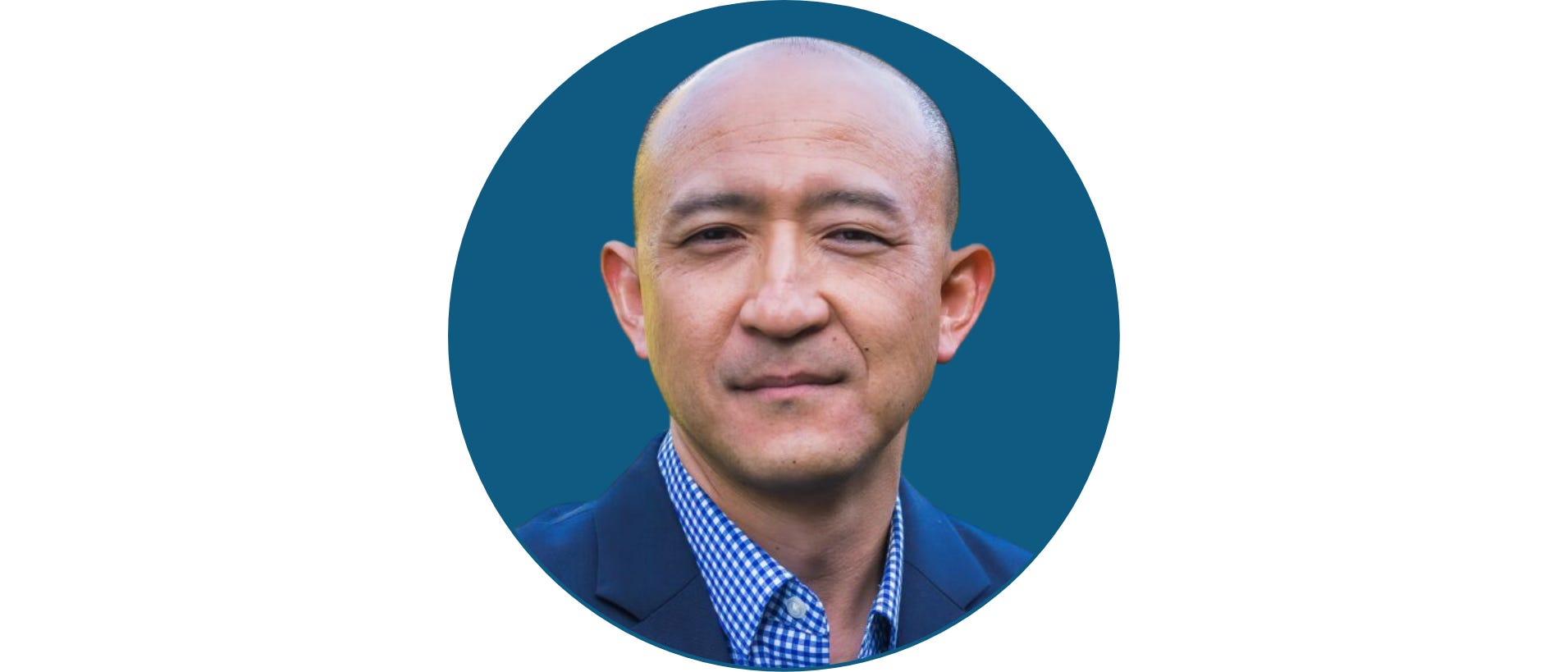
Dr. Daniel D. Lee is Academic Dean for the Asian American Center at Fuller Seminary and Associate Professor of Theology and Asian American Studies. His scholarship and teaching focus on theology, culture, and the lived experiences of Asian American Christian communities.
Additional Reading
To explore this linguistic approach to Asian American formation, and the Asian American Quadrilateral (AAQ), check out Dr. Daniel D. Lee's book, Doing Asian American Theology.
About Centering
Centering: The Asian American Christian Substack is a publication of the Asian American Center at Fuller Seminary (AAC). At the AAC, we train and support Asian American Christian leaders of East, Southeast, and South Asian descent, including multiracial individuals and adoptees – grounding their life and work in over 170 years of Asian American history, and addressing their spiritual and psychological concerns.
We do this work through our cohorts, seminary courses, and the programs of our initiatives. The AAC is home to the Asian American Pastoral Formation Initiative, the Asian American Well-Being Collaboratory, the Asian American Christian History Institute, the Filipino American Ministry Initiative, and the Korean American Ministry Initiative.
To learn more, support our work, and subscribe to our newsletter, visit aac.fuller.edu.
For information about Fuller Seminary’s degree programs and continuing education resources, visit fuller.edu.