



As a second-generation Chinese American, I learned early to value education. Born and raised in San Francisco, I internalized my family’s migration story: escaping the Communist regime, moving to Hong Kong, and settling in America to pursue the American Dream. Education, echoed by Confucianism, is the path not just to knowledge, but to fulfill my moral obligation as the eldest son—one who will open the gates to familial flourishing.
Possessing knowledge is about fulfilling my birthright: serving with competence and leading with power to share. With this, I aspired to become a doctor.
An Unexpected Calling
Yet, God disrupted my path when I encountered the Holy Spirit for the first time in college. Captivated, I sought Christ and unexpectedly sensed a calling to ministry. In disorientation and eagerness, I paused the pre-medical route and enrolled in seminary at Fuller.
Theological education became food for my spirit. I not only refined my skills in ministry but also found tools to interpret and find God in the world, the church, and my own story. With a growing knowledge of God, I felt empowered to serve.
But to my non-religious family, what value does theological knowledge have to the world—let alone to them and the Asian American community?
Paving an Integrative Path
As the eldest, I felt driven to prove that studying theology was valuable and impactful to human flourishing. In a modernistic, pluralistic, and post-Christian world, Christianity is seen as irrelevant and broken. Authority as a theologian and minister cannot simply be claimed; trust must be earned.
During COVID, God expanded my ministry to serve those in the hospital. Continuing my studies and ministry at church, I learned to offer care as a chaplain. I faced doubt from my parents, weariness from disillusioned Christians, and skepticism from healthcare leaders. Yet I found holy inspiration: pave an integrative path between what felt mutually exclusive—theology and medicine.
The White Coat’s Credibility
Now, again wearing the title of student—this time, a medical student—the winds have turned. Medicine provided a different credibility.
I first noticed a shift when my parents approached me to interpret their MRI findings. Again when my aunt asked about caring for a cooking burn, and again when a friend asked about their lab results. In the clinic, patients see my white coat, invite my expertise, and are no longer suspicious of my religion. Authority is now assigned; trust is given.
To my Asian American family and community, medical knowledge is seen as valuable, yet theological knowledge remains contested. In modernity, the physician carries social and economic power, while in a pluralistic, post-Christian world, the minister is often peripheral and socially invisible.
Knowledge as Embodied Wholeness
However, as Asian American Christians, we must remain wary of where power is held and how trust is given. The Confucian archetypal value for education may lead us toward a holistic embodiment of knowledge, character, and service—but it remains vulnerable to the Model Minority myth. Without vigilance, we may be reduced, extracted as technical labor, and confined as mere cogs in an economic machine.
The integration of theology and medicine in our Asian American context is God’s invitation to build credibility with humility, akin to the task of a theologian and minister. We are invited to become leaders—knowledge-bearers of theology, culture, medicine, psychology—who wield power with earned trust and dignified presence. With God, we are invited to possess knowledge as power not merely to serve, but to offer embodied wholeness and healing in all.
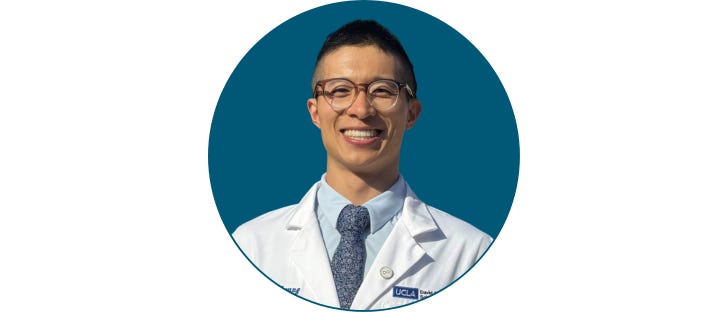
Preston Leung (MDiv) is a Research Fellow of Medicine, Justice, and Theology at the Asian American Center at Fuller Seminary; a second-generation Chinese American; and an MD candidate at the David Geffen School of Medicine at UCLA.
 | A guest post by
|
Appreciate these thoughtful reflections Preston! Will share with my medical colleagues/community.