

This Table was Built for You Too
Celebrating the labor, wisdom, and belonging of Asian American women in ministry

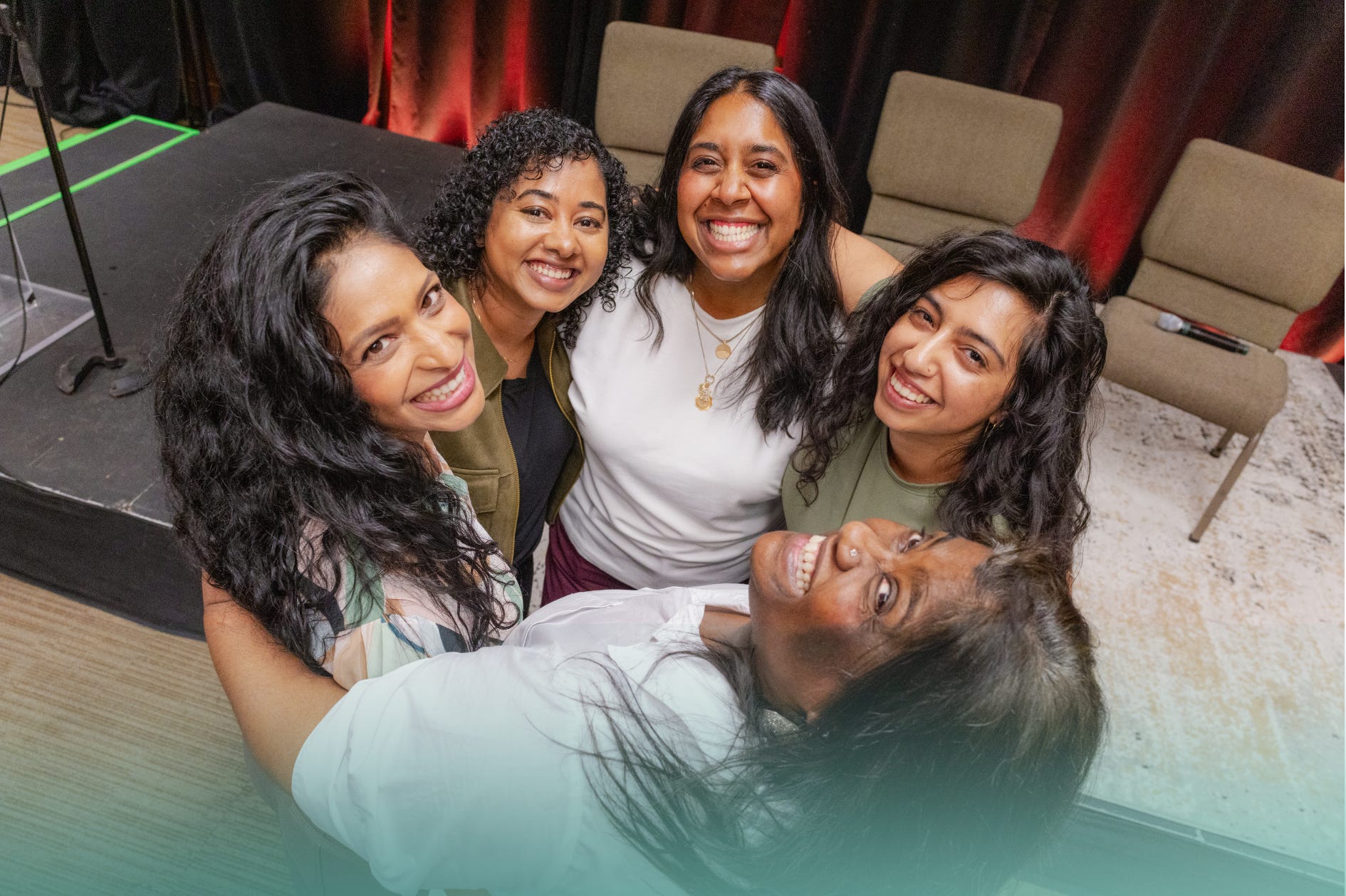
Last month, as part of our Asian Pacific American Heritage Month (APAHM) celebrations, the Asian American Center hosted a Women in Ministry Luncheon on Fuller’s campus, gathering local pastors, ministry leaders, mental health practitioners, and students to rest, listen, and share intergenerational wisdom in a sacred space of belonging. Together, we celebrated leadership, nurtured connection, and strengthened one another—reminded that we do not labor alone in the faithful work to which we are called.
On Building the Table
by Gillian Colcol-Garcia
There were no explanations for why this gathering was needed. I knew it the way you know something before you even have the language for it—felt in your body, in the quiet accumulation of moments when you looked around and realized you were the only one, or one of very few, and kept going anyway. Every woman I recruited in the planning process knew it so deeply as well.
We gathered Asian American women in ministry—pastors, ministers, chaplains, elders, spiritual directors, seminarians—to do something deceptively simple: rest, listen, and share wisdom across generations. No agenda beyond that. No platform to build. Just a table, a meal, and the kind of unhurried time that ministry rarely makes room for.
What I did not expect was how quickly the room exhaled.
We asked everyone to share their name, their ministry context, their neighborhood, and where they fell in their sibling order. No explanations. Rapid fire. In a room full of Asian American women, that last question did something. Birth order carries weight in our families. It shapes what we were asked to carry, what we were never asked to carry, and what we quietly picked up anyway. Naming it together, even briefly, was its own small act of recognition.
From there, our panelists led us through three conversations: embracing the call, navigating the institutions that hold it, and sustaining the work for the long haul. These were not abstract topics. They were the questions these women live inside every week—about advocacy, about boundaries, about what it costs to stay and what it costs to leave, about burnout that no one warned you was coming in every season of your life and ministry stage.
God showed up, as God tends to, in the specificity. In the woman who was the first female pastor at her church and said so out loud. In the younger minister who finally had words for what she had been navigating alone. In the new mother leading her century-old congregation. In the laughter that broke open something that had been held too tightly for too long.
As the organizer, I was the one keeping time and making a fuss, like Martha serving Jesus. But I was also in the room, also receiving, like Mary receiving from Jesus. That is its own grace—to build a table and find that it was built for you too.
On Being Witnessed
by Jessica ChenFeng
I can count on one hand the number of times I have felt the way I did at this gathering of Asian American Women in Ministry: delighted, unselfconscious, filled with deep adoration for my peers, and profoundly seen and loved.
As someone who has planned and executed many conferences, I was struck by the care, attention, and brilliance of my Asian American women pastor friends (Pastora Gillian, Rev. Mary Ellen, Pastor Caroline, Rev. Dr. Janette, Pastor Wisdom), who envisioned and executed this luncheon. But I want to offer you something beyond the usual reflection—a gift of witnessing: a chance to see and feel the attunement that Asian American women in ministry have offered for decades.
The Visible Care
Event logistics are straightforward: space, food, guest list, decor, timing. Yet each was attended to with remarkable care. Unlike many Asian American Christian gatherings that center East Asian culture, this space truly honored our beautiful diversity. I watched my South Asian women in ministry friends—many of whom carry deep pain and loneliness—come together for the first time. Their joy at being together and seen was palpable, and I found myself sharing in it.
And the food. Lumpia. Bánh mì. Spring rolls. Boba. Do you know the time required to identify diverse restaurants, negotiate budgets, and honor our varied heritage through flavor? With food being our language of love, this thoughtfulness ensured that even our tastebuds could taste the care given to each of us.
The Invisible Attunement
More difficult to see, and perhaps more significant, is the attunement to the underlying currents: How might attendees be feeling and experiencing the event? Whose stories are told? How does this shape our ongoing sense of belonging? What gendered expectations can we counter?
We are so often taught to minimize ourselves to protect others’ fragility.
Our emcee, the Reverend Dr. Janette Ok, intuitively knew and tenderly attended to all the energies and baggage that might have entered the space. She invited us to release the impostor syndrome we carry from patriarchal church systems—systems where we must constantly prove our worth and end up never feeling enough or belonging as leaders. The women who shared their experiences and wisdom owned their voices and modeled for us a presence that is full of grace, absolute brilliance, and competence—we are so often taught to minimize ourselves to protect others' fragility.
While these photos overflow with joy, they cannot quite convey all that was felt and held in community. This reflection offers a glimpse into the invisible labor of remarkable Asian American women leaders—those rare moments when our labor is truly valued, seen, received, and celebrated. In creating for each other and ourselves from a place of knowing our belovedness and completeness in Christ, we found deep respite, genuine care, and freedom.
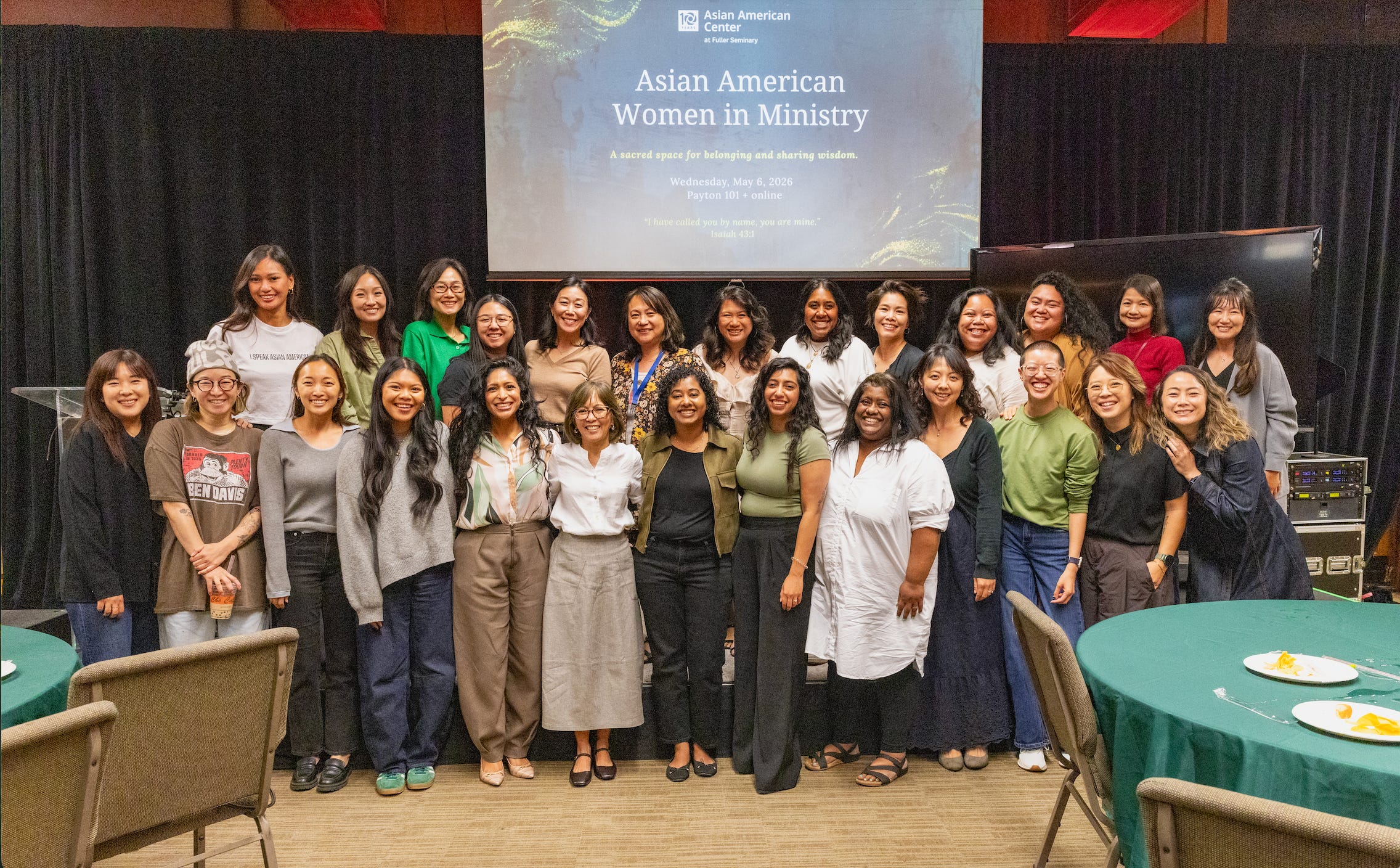
What was built that afternoon was more than a luncheon. It was proof that when Asian American women in ministry are given unhurried time, a table set with intention, and the company of those who understand without explanation, something holy happens. Stories find their words. Burdens become lighter in the sharing. Younger women see in their elders what is possible; elders find renewal in those just beginning. We leave less alone than we arrived—and more certain that the work we carry is worth continuing. May we keep building tables like this one, and may we keep finding, every time, that there is room enough for all of us.
If you read this and felt the ache of that recognition—of wanting a room like this—there is a place for you. We invite you to join our Women in Ministry Formation Group, a space for Asian American women to be known, sustained, and sent. Email aac@fuller.edu for more information.

Gillian Garcia, MDiv, serves as the Program and Administrative Specialist for the Asian American Center at Fuller Seminary. A pastor and writer by vocation, she holds a Master of Divinity from Fuller Seminary and is a 2025–2026 recipient of the Parish Pulpit Fellowship award. Prior to her role at Fuller, Garcia co-pastored C3 Church Metro Manila with her husband, Bernard. She currently ministers to and organizes within the Filipino American community across the greater Los Angeles area.

Jessica ChenFeng, PhD, LMFT is the chair of the Doctor of Marriage Family Therapy program at Fuller Seminary and director of the Asian American Well-Being Collaboratory. She has been a practicing MFT for over 20 years and consults with academic, healthcare and church organizations to improve the well-being of people within their relationships and communities. Her research and clinical and community work center around Asian American identities, intergenerational relationships, trauma, and Christian spirituality.
About Centering
Centering: The Asian American Christian Substack is a publication of the Asian American Center at Fuller Seminary (AAC). At the AAC, we train and support Asian American Christian leaders of East, Southeast, and South Asian descent, including multiracial individuals and adoptees – grounding their life and work in over 170 years of Asian American history, and addressing their spiritual and psychological concerns.
We do this work through our cohorts, seminary courses, and the programs of our initiatives. The AAC is home to the Asian American Pastoral Formation Initiative, the Asian American Well-Being Collaboratory, the Asian American Christian History Institute, the Filipino American Ministry Initiative, and the Korean American Ministry Initiative.
For information about Fuller Seminary’s degree programs and continuing education resources, visit fuller.edu.