



Every organization has values—stated or unstated, visible or hidden in the way things actually get done. At the Asian American Center at Fuller Seminary (AAC), we want ours to be named clearly, held honestly, and returned to often—not as a performance of virtue, but as an ongoing commitment to integrity.
These four values are not a destination we have arrived at. They are a direction we are always moving toward, because how we do something is just as important as what we do. Integrity matters in every aspect of our work, even as we acknowledge that we do not always live up to our ideals. In that spirit, we seek to embody and be guided by these four core values.
How we do something is just as important as what we do.
1. Gospel
We always begin with God—and not just any conception of God, but the triune God revealed in Jesus Christ. Even in thinking about Asian American identity, we begin with the God who sees us fully and invites all of who we are into God’s presence. Our goal is not simply to be Asian American and Christian, as though our identity could exist independently from God. Rather, we seek to be Asian American in Christ, because God is Lord over all, including our Asian Americanness.
When we speak of the Gospel, we confess a God of radical and transformative grace, not a moralistic or legalistic religiosity. We recognize that it is not always easy to distinguish the two, especially in a culture where Christianity can become merely social—about finding friends at church—or burdensome, driving people toward exhaustion and obligation. The point is not merely to identify as Christian, but to genuinely desire Christ and Christ’s Kingdom with joy and delight.
When we speak of the Gospel, we confess a God of radical and transformative grace, not a moralistic or legalistic religiosity.
2. Critical Knowledge
To work with Asian American communities well, we believe there is an important difference between uninformed, stereotypical, and shallow understandings of Asian America and those that are informed, nuanced, and thoughtful. Personal experience matters, but personal experience alone is not critical knowledge. We must resist projecting our limited perspectives onto others without careful reflection and learning.
Without this deeper work, we may be able to tell jokes or share anecdotes, but we will struggle to make meaningful cultural and racial analyses that help us understand our lives in Christ. We are grateful to draw from over fifty years of Asian American studies and Asian American psychology, remembering that we are not pioneers but beneficiaries of the wisdom and labor of those who came before us. To better understand this, check out our Substack article, “Beyond ‘So Asian’—Finding a Language for Your Story.”
3. Well-Being
At the Center, we take Sabbath seriously. We are not machines or mere producers of work. We are human beings. Sabbath is not simply about setting aside time to work for God; it is about setting aside time to be human—to rest, reflect, and simply be. Even when we participate in God’s work, we are not merely instruments to be used. God works through us as covenantal partners, not as disposable tools.
Because of this, we value every relationship both within and beyond the Center. We strive to work sustainably, with realistic deadlines and healthy boundaries, alongside fair compensation and mutual respect.
Even when we participate in God’s work, we are not merely instruments to be used. God works through us as covenantal partners, not as disposable tools.
4. Partnership
The work before us—the reformation of the Asian American Church toward God’s radical grace and the fuller integration of our Asian Americanness in Christ—is too large for any one person or organization to accomplish alone. We must work together.
In every partnership, we seek to discern whether our collaboration reflects the Gospel, cultivates critical knowledge, and promotes well-being, so that our labor may be constructive rather than exhausting and fruitless. We seek to honor and respect every organization and individual we work with, resisting extractive relationships.
In our time, ministry scandals and stories of toxicity and abuse have become far too common, with entire lifetimes of work undone by unhealthy leadership and practices. Because of this, we would rather do less with care and integrity than do more carelessly. In all things, we live and work by God’s grace alone.
In all things, we live and work by God’s grace alone.
An Invitation: Walk With Us
We share these values not because we have perfected them, but because we believe naming them matters. They keep us accountable—to God, to one another, and to the communities we serve. We are always learning what it means to live them well.
If these values resonate with you, we’d love to be in community with you. Explore our cohorts, read further in the resources below, or simply share this post with a ministry leader or friend who needs to hear it. We are grateful you are here.
To learn more, support our work, and subscribe to our newsletter, visit aac.fuller.edu.
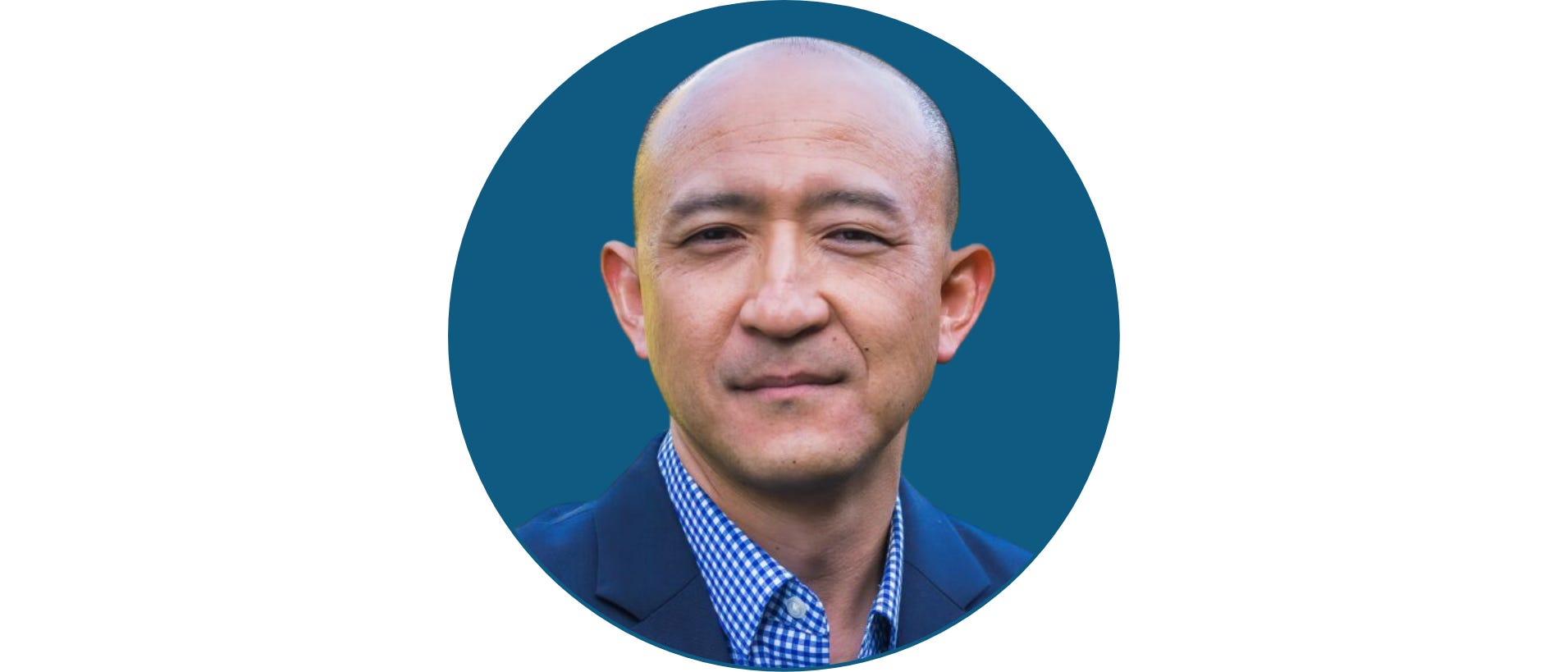
Dr. Daniel D. Lee is Academic Dean for the Asian American Center at Fuller Seminary and Associate Professor of Theology and Asian American Studies. His scholarship and teaching focus on theology, culture, and the lived experiences of Asian American Christian communities.
Additional Reading
For more on the Asian American Quadrilateral (AAQ), check out Dr. Daniel D. Lee’s book, Doing Asian American Theology.
About Centering
Centering: The Asian American Christian Substack is a publication of the Asian American Center at Fuller Seminary (AAC). At the AAC, we train and support Asian American Christian leaders of East, Southeast, and South Asian descent, including multiracial individuals and adoptees – grounding their life and work in over 170 years of Asian American history, and addressing their spiritual and psychological concerns.
We do this work through our cohorts, seminary courses, and the programs of our initiatives. The AAC is home to the Asian American Pastoral Formation Initiative, the Asian American Well-Being Collaboratory, the Asian American Christian History Institute, the Filipino American Ministry Initiative, and the Korean American Ministry Initiative.
For information about Fuller Seminary’s degree programs and continuing education resources, visit fuller.edu.